What is L-Carnitine?
L-Carnitine is a naturally occurring compound made from the amino acids lysine and methionine. Your body can synthesise it in the liver and kidneys, and you also get it from food (especially red meat and dairy) and supplements.
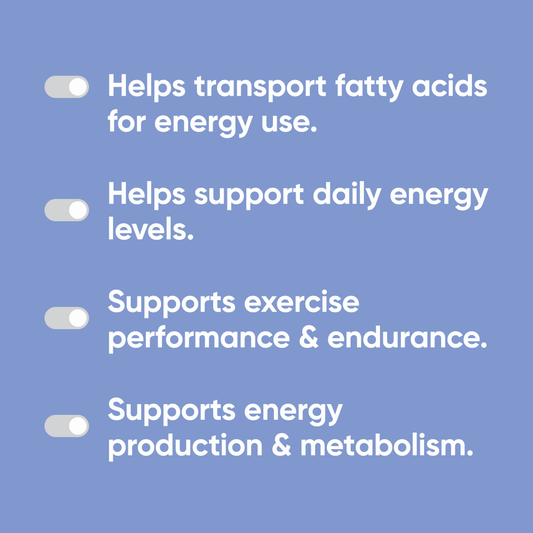
Its main job is to help shuttle long-chain fatty acids into mitochondria so they can be oxidised (“burnt”) for energy. Because of this role, L-Carnitine is popular for training days, busy schedules and weight-management programmes.
How L-Carnitine Works
The energy transport “shuttle”
Fatty acids can’t enter mitochondria unaided. L-Carnitine binds them and transports them across the mitochondrial membrane as acyl-carnitine, handing them over for beta-oxidation (energy production). The result: more efficient use of fat as a fuel, especially when demand is high (e.g., exercise).
Recovery & metabolic support
By improving fatty-acid transport and buffering metabolic stress, L-Carnitine may help reduce markers of exercise-induced muscle damage, support recovery between sessions, and assist overall metabolic flexibility (your body’s ability to switch between carbs and fat as fuel).
Evidence-Based Benefits of L-Carnitine
1) Energy metabolism & active days
L-Carnitine supports the use of fat for energy, which many people feel as smoother energy on long or intense days, during fasted cardio, or before a workout.
2) Training performance & recovery
Studies on L-Carnitine (including L-Carnitine L-Tartrate) suggest potential benefits for reducing exercise-induced muscle damage and soreness, improving high-intensity work capacity in some individuals, and supporting post-exercise recovery. It’s not a stimulant; think of it as nutritional support for the “engine” that powers your training.
3) Weight-management support (not a magic bullet)
L-Carnitine can assist fat utilisation, but results depend on total diet, activity, sleep and consistency. It can be a helpful add-on alongside a calorie-appropriate, protein-centred plan and regular movement, not a standalone solution.
4) Heart & metabolic health (specific contexts)
Carnitine plays a role in cardiac energy metabolism. Research in clinical settings has explored its use around heart function and fatigue; if you have a medical condition, always speak with your clinician before use.
5) Male fertility & nutrient status
Some evidence links L-Carnitine with improvements in certain sperm parameters in sub-fertile men. This remains a specialist area—use only under medical guidance if trying for pregnancy.
Reality check: Responses to L-Carnitine vary. Training quality, nutrition, sleep and stress management still do the heavy lifting.
Who Might Benefit Most?
- Active people & gym-goers looking for non-stimulant support around workouts and recovery.
- Those on plant-based or low-carnitine diets (vegans/vegetarians typically consume less dietary carnitine).
- Busy professionals or parents who prefer a quick liquid shot instead of capsules or tablets.
- Weight-management programmes seeking to support fat utilisation alongside diet and movement.
Dosage & How to Take (Liquid)
Typical daily amounts
- General support: 500–1,500 mg/day
- Training & recovery focus: 1,000–2,000 mg/day
- Split dosing: You can split into 1–2 servings across the day.
Timing tips
- Take 30–60 minutes pre-workout or with a meal.
- Pairing with carbohydrates can support uptake for some people.
- On rest days, take with breakfast or lunch.
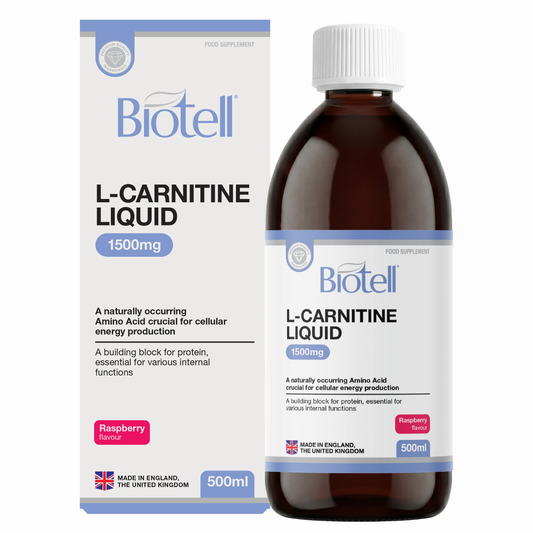
Using Biotell L-Carnitine Liquid 1500 mg (25 ml)
How to measure
- Each 25 ml serving provides 1500 mg L-Carnitine.
- Consume the liquid straight or mix with a little water/juice.
Serving examples
- Everyday support (≈750–1500 mg): ½–1 bottle (12.5–25 ml).
- Training days (≈1500–2000 mg): 1 bottle pre-workout (25 ml). If aiming higher than 1500 mg, speak to a professional.
Always follow the directions on your specific product. If you’re pregnant, breastfeeding, have a medical condition, or take prescription medicines, consult your healthcare professional before use.
Side Effects, Safety & Precautions
Is L-Carnitine safe?
L-Carnitine is generally well-tolerated at typical intakes. Some people may notice mild digestive upset (e.g., nausea, cramps) or a temporary “fishy” odour at higher amounts.
Who should be cautious?
- Pregnant or breastfeeding: use only with professional advice.
- On medication or with health conditions: consult your clinician first (especially if on anticoagulants or with a seizure history).
- Allergies/intolerances: check the label for the most current ingredients and allergens.
Upper limits?
There isn’t an officially established UK upper limit for L-Carnitine foods/supplements, but most research uses ≤2 g/day. Stick to label directions unless advised otherwise by a healthcare professional.
Types of Carnitine & Why Choose Liquid
L-Carnitine (base)
The foundational form used for general energy/fat-transport support. Suits most daily and workout routines.
Acetyl-L-Carnitine (ALCAR)
Often used for cognitive-focused protocols; structurally crosses the blood-brain barrier more readily.
L-Carnitine L-Tartrate (LCLT)
Common in sports research; frequently studied for recovery and muscle damage markers.
Why liquid?
- Fast & tablet-free: quick to take pre-workout or on busy days.
- Flexible dosing: easy to adjust within your daily range.
- Stack-friendly: simple to combine with electrolytes or a carb sip.
Summary & Expert Recommendation
L-Carnitine helps your body use fat for energy and can support workout days and recovery—without stimulants. For most people, 500–1,500 mg/day is a sensible range; athletes and very active individuals sometimes use up to 2,000 mg/day.
Make carnitine simple: Choose a liquid you’ll take consistently. Use it 30–60 minutes before training or with a meal on rest days. Pair with good sleep, protein-centred meals and smart training for best results.
Shop L-Carnitine LiquidThis article is for information only and does not replace medical advice. Always consult your healthcare professional about your personal needs, dosing and interactions.