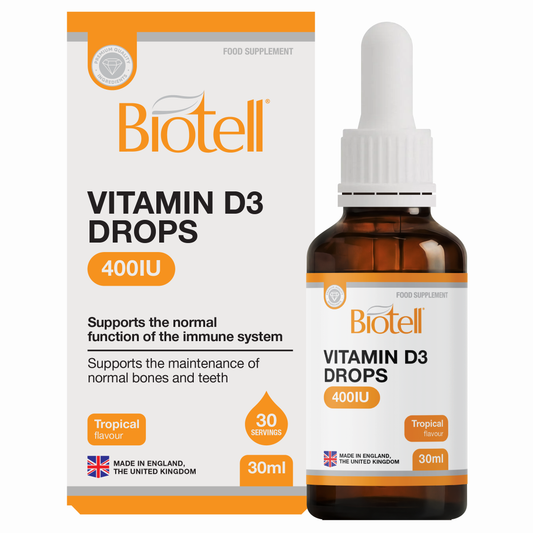
Vitamin D3, what it does and why it matters
Vitamin D is a nutrient your body needs for overall health. One of its best-known jobs is helping your body absorb calcium, which is a key building block for strong bones and teeth. Vitamin D also contributes to normal muscle function and plays a role in immune function.
Calcium absorption
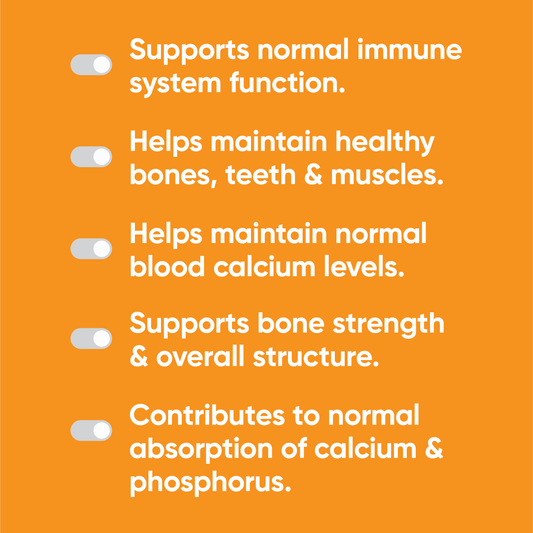
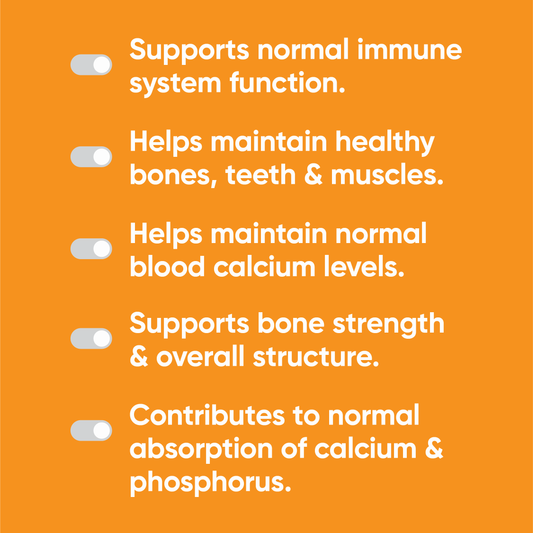
Vitamin D supports the normal absorption and utilisation of calcium and phosphorus.
Muscle function
Vitamin D contributes to normal muscle function, which matters for stability and movement as you age.
Immune support
Vitamin D contributes to the normal function of the immune system, which supports everyday resilience.
Share-worthy fact: Typical recommended daily amounts are often listed as 600 IU (15 mcg) for most adults, and 800 IU (20 mcg) for adults over 70, but needs vary.
Why vitamin D is a common gap in the UK
Sunlight helps your body make vitamin D, but in the UK many people do not get enough sun exposure year-round. UK guidance often recommends that adults and children over 4 consider a daily supplement containing 10 micrograms of vitamin D, especially when sunlight is limited.
Simple mindset: if you want a straightforward foundation for everyday health, Vitamin D3 is usually the starting point.
Where vitamin K2 fits in
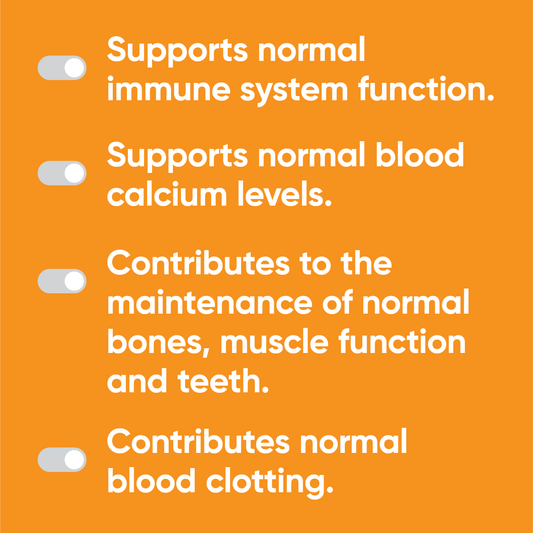
Vitamin K is best known for supporting normal blood clotting, but it also plays a role in bone metabolism. Vitamin K2 is often discussed for its role in activating proteins involved in calcium regulation, which is why people talk about vitamin K2 benefits alongside Vitamin D3.
Think of D3 as the “absorption” step
Vitamin D3 supports your body’s ability to absorb calcium.
Think of K2 as the “utilisation” conversation
Vitamin K2 is linked to proteins involved in calcium handling, especially in relation to bones and soft tissues, and research is ongoing.
Important safety note: If you take blood thinners like warfarin, vitamin K can affect how they work. Do not start a K2 supplement without medical guidance.
Vitamin D3 vs D3 + K2, the real difference
When people compare Vitamin D3 vs D3 + K2, they are usually asking one question, is D3 alone enough, or do I need the combo?
Vitamin D3 on its own
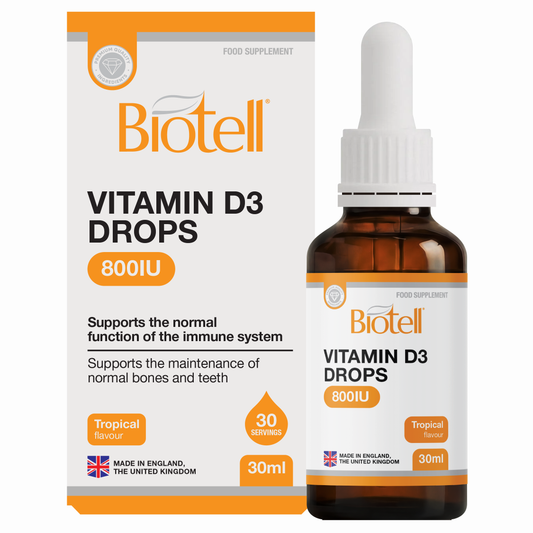
D3 alone can be a great option if your main focus is a clean baseline, especially during low sunlight months.
- Simple daily habit, one product
- Supports calcium absorption and general bone maintenance
- Easy to keep consistent
Vitamin D3 + K2 together
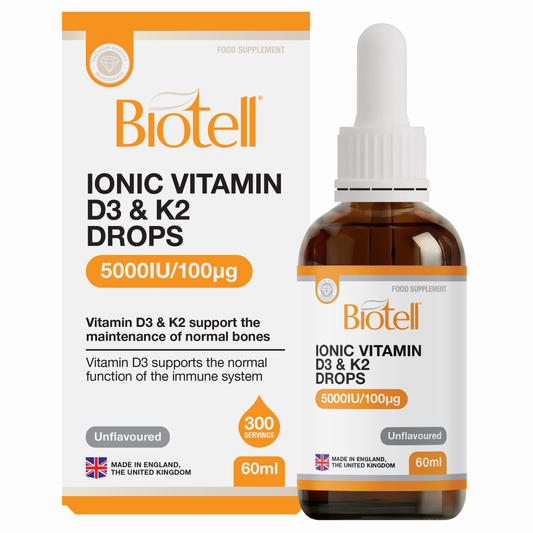
The combo is often chosen by people who want a more bone-focused approach, because D3 and K2 are commonly described as complementary.
- For people thinking long-term about bone support
- For those interested in calcium handling and bone-directed support
- Not suitable for everyone, especially with anticoagulants
Balanced takeaway: For many people, D3 alone is a strong baseline. D3 + K2 can be a smart upgrade when you want a more targeted bone and calcium strategy, with the right safety checks.
Who should choose which?
Choose Vitamin D3 if you want a simple baseline
- You want straightforward support for calcium absorption and everyday wellbeing
- You prefer a minimal routine, then reassess later
- You want an easy option for seasonal consistency
Consider D3 + K2 if your focus is more bone-first
- You are building a long-term “foundations” routine, movement, protein, minerals, and consistency
- You want D3 paired with the commonly discussed vitamin K2 benefits
- You are not on medication that requires vitamin K management, or you have professional guidance
Quick caution checklist: Speak to a healthcare professional before adding K2 if you take anticoagulants, have a condition affecting absorption or calcium balance, or have been prescribed high-dose vitamin D.
Practical routine tips to get better results
Take drops with a meal
Vitamin D is fat-soluble, so taking it with food that includes some fat can support absorption.
Be consistent for 8–12 weeks
Think habits, not hacks. Most supplement routines work best when you keep them steady.
Avoid mega-dosing
Very high intakes can cause problems. Stick to label directions unless your clinician advises otherwise.
Support the basics that make bone routines work
Bone support is bigger than one nutrient. Prioritise strength training, protein, and a balanced diet alongside supplementation.
If you want certainty, test then tailor
A blood test for vitamin D status can help you decide whether you need a maintenance dose or something more specific.
Biotell-friendly approach: Start with D3 as your baseline, track consistency for a month, then decide if you want to stay with D3 or move to D3 + K2.
Vitamin D3 vs D3 + K2 at a glance
| Option | Best for | Key idea | What to watch |
|---|---|---|---|
| Vitamin D3 | Simple baseline support | Supports calcium absorption, plus muscle and immune function | Do not exceed label dosing without guidance |
| Vitamin D3 + K2 | More bone-first routines | D3 supports absorption, K2 is linked to proteins involved in calcium utilisation | Not suitable with warfarin without medical guidance |
| Both options | Consistency seekers | Work best when taken regularly with food | Keep routines simple, avoid stacking duplicates |
Disclaimer: This article is for general information only and is not medical advice. Always consult a qualified professional for personalised advice.
FAQ's
Do I need K2 if I take vitamin D3?
Can I take vitamin K2 if I am on warfarin?
What is the best time of day to take D3 or D3 + K2?
Can I take these with calcium?
Should I test my vitamin D levels first?
Product links and references
Biotell products mentioned
External references
- NHS: Vitamin D
- NIH ODS: Vitamin D (Consumer)
- NIH ODS: Vitamin K (Consumer)
- BMJ Open Heart: Vitamin K2 and cardiovascular health
- NHS: Warfarin, advice about food and drink (vitamin K)
Disclaimer: This content is for general information only and is not medical advice. Always follow product labels and seek professional advice if you have questions about supplements or medication interactions.