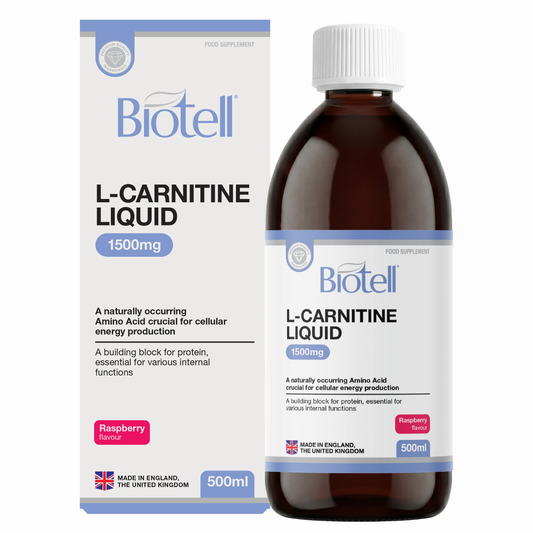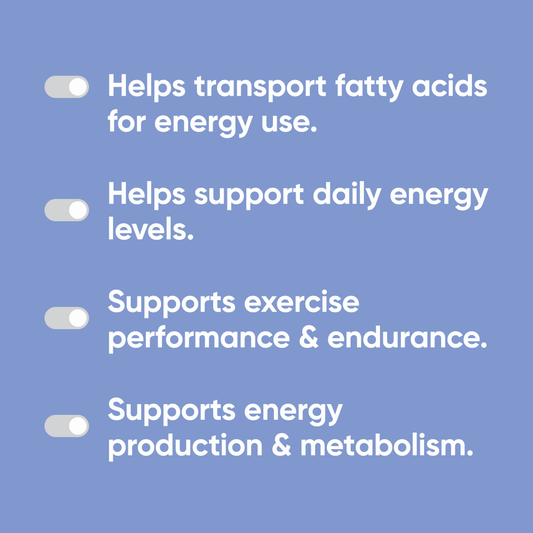

L-Carnitine is best known for one job, helping transport fatty acids into mitochondria so your body can use fat as fuel. That is why it’s popular for training days, busy schedules, and weight-management routines. This guide explains what L-Carnitine is, who it’s best for, how to use liquid L-Carnitine in real life, and how to keep your routine simple.
Short on time?
L-Carnitine is a non-stimulant option used to support energy metabolism and training routines. Biotell L-Carnitine Liquid provides 1500mg per 25ml. Adults typically use 25ml daily, and ages 13–18 typically use 12.5ml daily. Consistency beats complexity, use it with a meal or 30–60 minutes pre-workout.
See product links and referencesDisclaimer: This article is for general information only and is not medical advice. If you are pregnant, breastfeeding, have a medical condition, or take medication, consult a healthcare professional before use.
What is L-Carnitine?
L-Carnitine is a naturally occurring compound made from the amino acids lysine and methionine. Your body can produce it, and you also get it from food (especially red meat and dairy). It is commonly used as a supplement by active people and those who want non-stimulant support for energy metabolism.
How it works in the body
1) The “fat transport” role
Fatty acids need help getting into mitochondria, the part of the cell that produces energy. L-Carnitine helps transport those fatty acids so they can be used to produce energy.
2) Fuel flexibility
People often use L-Carnitine to support the body’s ability to use fat as fuel, especially during training blocks or when aiming to improve metabolic flexibility.
3) Non-stimulant support
L-Carnitine is not a stimulant. Many people like it as a routine add-on on days when they want support without caffeine.

Evidence-based benefits in real life
Energy metabolism and active days
L-Carnitine is used to support energy metabolism and fat utilisation. Some people describe this as steadier energy on long days or as a useful pre-workout routine when they do not want stimulants.
Training and recovery support
Research has explored L-Carnitine (including different carnitine forms) for exercise performance and recovery markers. Results vary by person, training status, and protocol, so it is best viewed as support for your “engine”, not a shortcut.
Weight-management routines
L-Carnitine is often used alongside a calorie-appropriate, protein-centred plan and regular movement. It is not a standalone fat-loss solution, but some protocols use it to support fat utilisation.
Low-carnitine diets
People on plant-based diets typically consume less dietary carnitine. L-Carnitine is sometimes used as a practical way to support intake in those contexts.
Reality check: training quality, protein intake, sleep, and total weekly movement still do the heavy lifting. Supplements work best when the fundamentals are already in place.
Who might benefit most?
L-Carnitine tends to suit people who want non-stimulant support for training, recovery, or busy days, and those who prefer liquids over capsules.
This may suit you if
- You train regularly and want a non-stimulant routine add-on
- You prefer liquids over tablets
- You follow a plant-based or low-meat diet
- You want something simple to take before workouts
Consider extra caution if
- You are pregnant or breastfeeding
- You have a medical condition or take prescription medication
- You have a history of seizures, or have been advised to avoid certain supplements
Dosage and how to take Biotell L-Carnitine Liquid
What you get per serving
- 1500mg L-Carnitine per 25ml dose
- Serving size: 12.5ml to 25ml
- Servings per container: 20 to 40 (depending on dose)
Label directions
- Adults: 25ml once daily
- Ages 13–18: 12.5ml once daily
- Under 12: seek professional advice before use
- Shake well before use
Timing tips that keep it realistic
- Training days: take 30–60 minutes pre-workout, or with a meal if you train later
- Rest days: take with breakfast or lunch
- Optional: some people prefer taking it with a meal that includes carbohydrates
Always follow the directions on your specific product. If you plan to use higher intakes, speak with a qualified professional first.
Safety, side effects, and cautions
L-Carnitine is generally well tolerated at typical supplemental intakes. Some people may notice mild digestive upset (such as nausea or cramps), and in some cases a temporary “fishy” body odour at higher amounts.
Keep it safe
- Start with a lower dose for a week if you are new to it
- Take with food if you have a sensitive stomach
- Avoid stacking multiple products with overlapping ingredients
Speak to a professional first if
- You are pregnant or breastfeeding
- You take prescription medication
- You have a health condition that affects metabolism or digestion

A simple routine that actually works
If your goal is training support
- Take your daily dose 30–60 minutes pre-workout
- Prioritise protein and hydration daily
- Train consistently and track progression
- Sleep 7–9 hours where possible
If your goal is weight-management support
- Take your daily dose with breakfast or pre-workout
- Follow a calorie-appropriate plan with high protein
- Move daily, and strength train several times per week
- Use consistency for 8–12 weeks before judging results
Best mindset: L-Carnitine supports the routine, it does not replace the routine.
L-Carnitine Liquid at a glance
| Goal | How people use it | What to pair it with | Best tip |
|---|---|---|---|
| Workout days | Daily dose 30–60 minutes pre-workout | Protein, hydration, smart training | Non-stimulant, so it fits well with or without caffeine |
| Recovery focus | Daily use across a training block | Sleep, reduced stress, adequate calories | Track soreness and performance over 8–12 weeks |
| Busy days | Daily dose with a meal | Balanced meals, movement | Liquid format helps consistency |
| Weight-management routine | Daily use alongside diet and exercise | Steps, strength training, protein | Not a magic bullet, consistency matters most |
Disclaimer: This article is for general information only and is not medical advice. Always seek professional advice for personalised needs, dosing, and interactions.
FAQ's about L-Carnitine Liquid
Is L-Carnitine a stimulant?
When is the best time to take L-Carnitine Liquid?
Will L-Carnitine help with weight loss by itself?
Is Biotell L-Carnitine Liquid suitable for vegans?
Can teenagers take L-Carnitine Liquid?
Product links and references
Biotell product
- Biotell L-Carnitine Liquid 1500mg in 25ml
- L-Carnitine Liquid 1500mg/25ml product page
- L-Carnitine Liquid, Benefits, Dosage, and How to Use (Biotell guide)
- Active Ingredients (Biotell L-Carnitine Liquid)
- Health & Wellbeing collection
External references
- NIH Office of Dietary Supplements, Carnitine (Consumer)
- NIH Office of Dietary Supplements, Carnitine (Health Professional)
- Systematic review (2020): Benefits and risks of L-carnitine supplementation
- Systematic review (2021): L-carnitine and exercise performance
- Healthline: L-carnitine overview
Disclaimer: This content is for general information only and is not medical advice. Always follow product labels and seek professional advice if you have questions about supplements, conditions, or medication interactions.
Tags: